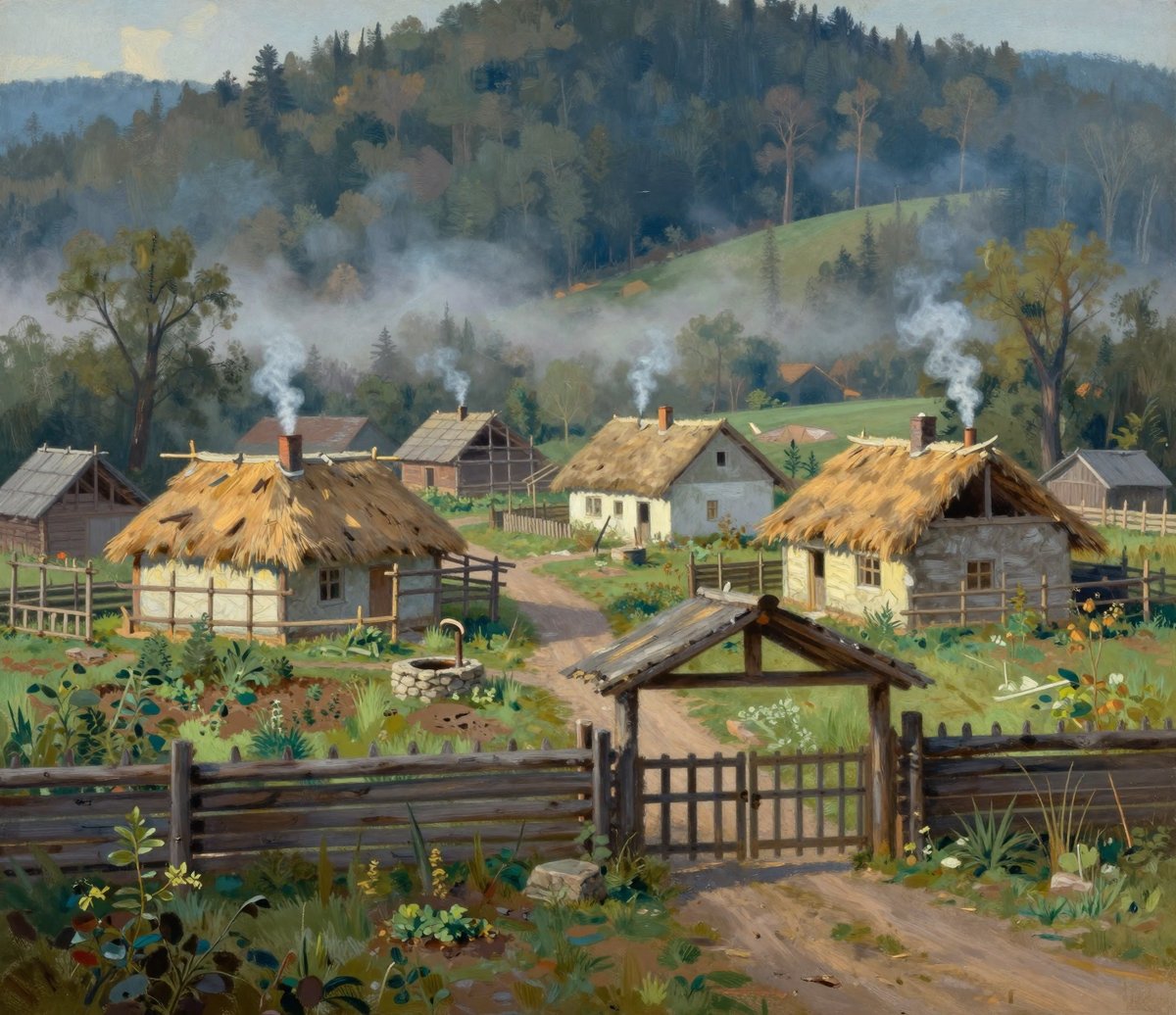
Five chimneys going at once on a cold morning, the gardens dug, the gate shut, the forest close behind. This is the scale the divine economy actually runs at: households, and whatever each one can spare.
Standing line
The Forge — a cluster of worlds run on a divine economy: belief makes gods, every class is a bargain, and the price is always paid by someone.
The place, physically
Not one world but a cluster of them. The big one, Aerthos, holds most of the stories: the Veridian frontier, where a half-rebuilt village stands new-thatched inside a timber palisade against old dark forest; the southern territories, where the Roman-Renaissance port of Portus Magnus runs on marble, steam-soot, printing presses and a harbour of lateen sails; and, sealed off behind an impassable wasteland, the scorching continent of Kethara — sand, oasis politics, and caravan roads that pass under the colossal ruined aqueducts of builders nobody remembers. Off the coasts lie the peaceable Islands of Tangi, and inland, a dead goddess's crater with a hidden settlement in its bowl. Then the other worlds: Thalassia, a beautiful drowning archipelago of stilt villages and sea-swallowed towns with about a century left; and a far vertical fragment where the leveled few live on mountaintops and airships, and everyone else lives on the ground.
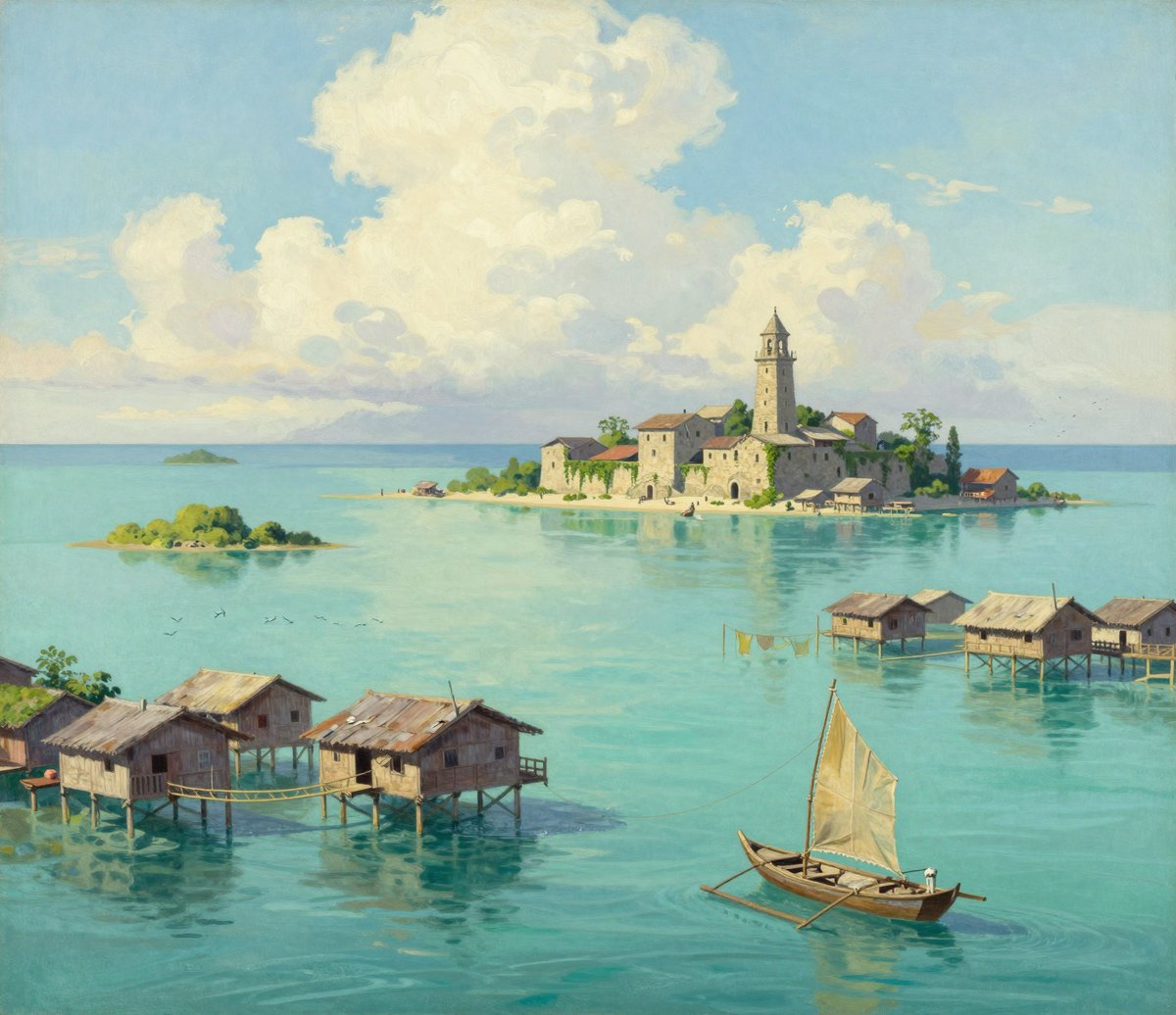
Thalassia, beautiful and losing. The water rises a little every year, and the world has about a century left on its clock.
The time
By texture, call it Renaissance going on early-modern: timber and thatch on the frontier, marble and tide-mills in the south — and only in Portus Magnus the first steam and movable type, arriving exactly where the establishment least wants them. The worlds keep no shared calendar, but the stories do keep an order. The Village We Built is the cornerstone and the "now" of the universe; The Tempering returns to the same frontier twenty years on; The Refugees follows what is left of its Trinity to another world entirely. The Travellers of the Dust runs concurrent with The Village We Built on its own sealed continent, and everything else stands alone in its own corner and its own year. Time in the Forge is local — what is shared is the economy underneath it, which is older than every calendar in the cluster.
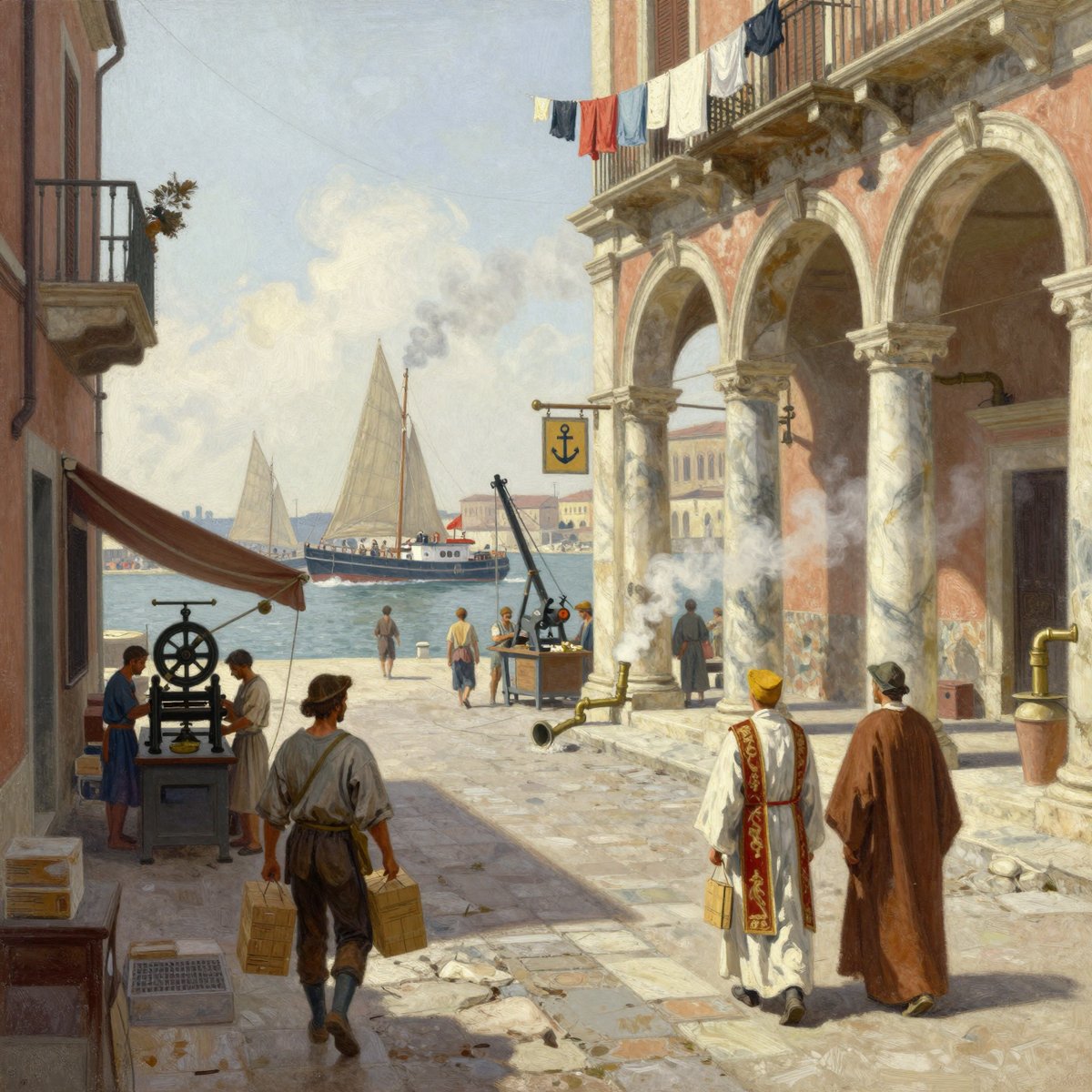
Portus Magnus. The people carrying the crates and working the presses are the ones the altar refused — and their books are the ones about them.
Daily life
Thatch going onto a roof beam by beam, a well cleaned out, a palisade watch kept against the things the forest sends. Bread, a candle-stub and a carved bird left on a wayside shrine, because a small god can live on that — and because everyone understands, without being told, that it matters which god you feed. On a coming-of-age morning a family walks a scrubbed and terrified fifteen-year-old to the altar to petition for a class, and walks home either blessed or refused. In the port, the refused do the actual work: crates, cranes, presses, nets. On Kethara the caravans pull in at dusk, water the beasts under a Builder arch, and post a watch. And at night there is a common room somewhere with a high fire, stew going round, and a dog asleep against a child — which is, in the end, the thing all of it is defending.
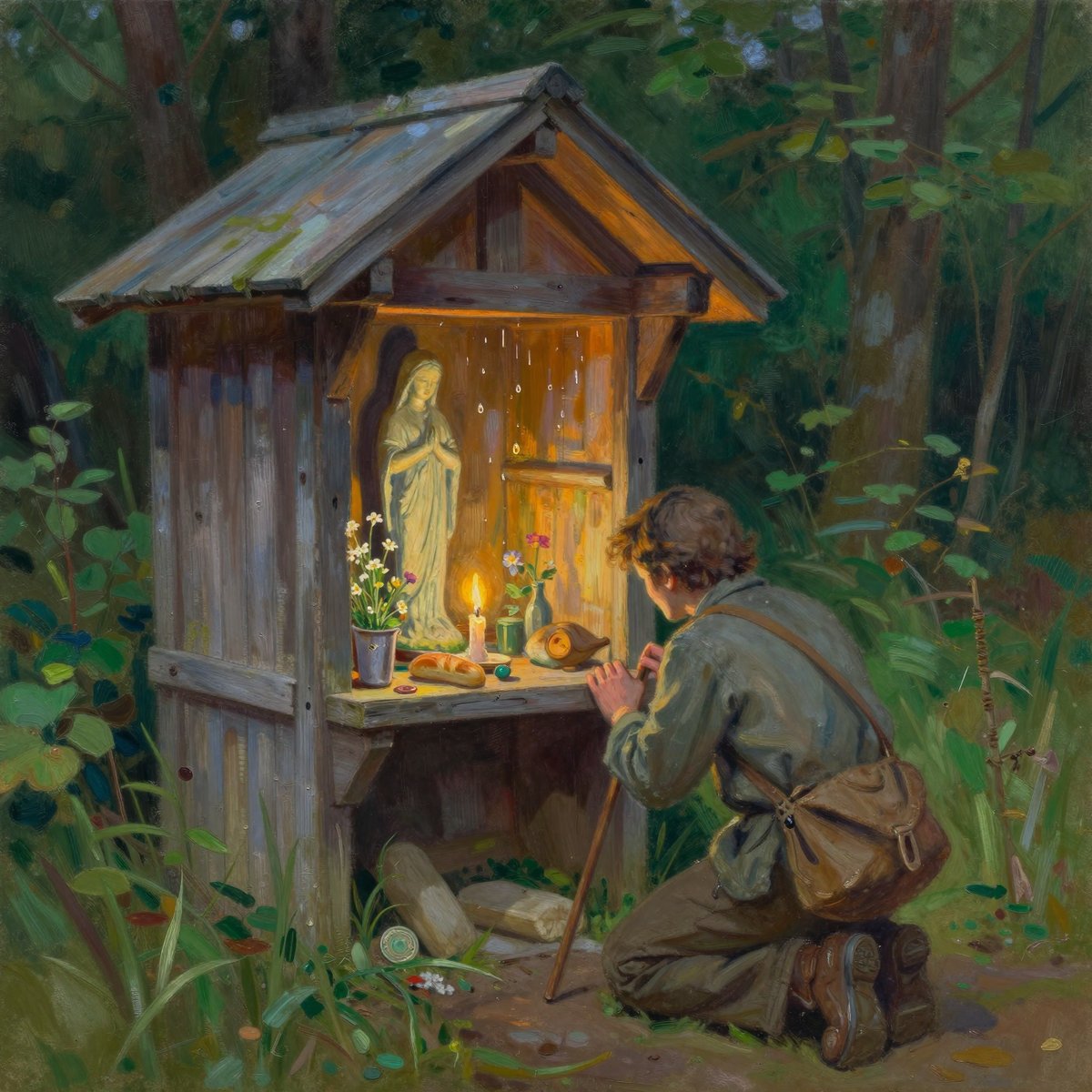
The economy at its smallest: bread, a candle, a carved bird. A god with almost nothing left can live on this — which is why it matters who you give it to.
The rules
The gods here are real, numerous, and hungry. They run on mortal belief the way a fire runs on wood, and everything mortals call magic — classes, blessings, miracles — is a grant from a god with motives of its own. A class is a loan. A miracle is a withdrawal. Belief freely given is the only currency that matters, and enough of it, gathered in the right hands, can make a brand-new god from scratch — which is also why the men who stand between you and the altar have such an interest in who gets to pray to whom. None of it comes as numbers or screens: a blessing feels like weather, a class like a trade you have signed before reading. And every power in the cluster, from a candle-shrine's warmth to a war god's army, is a bargain someone is paying for.
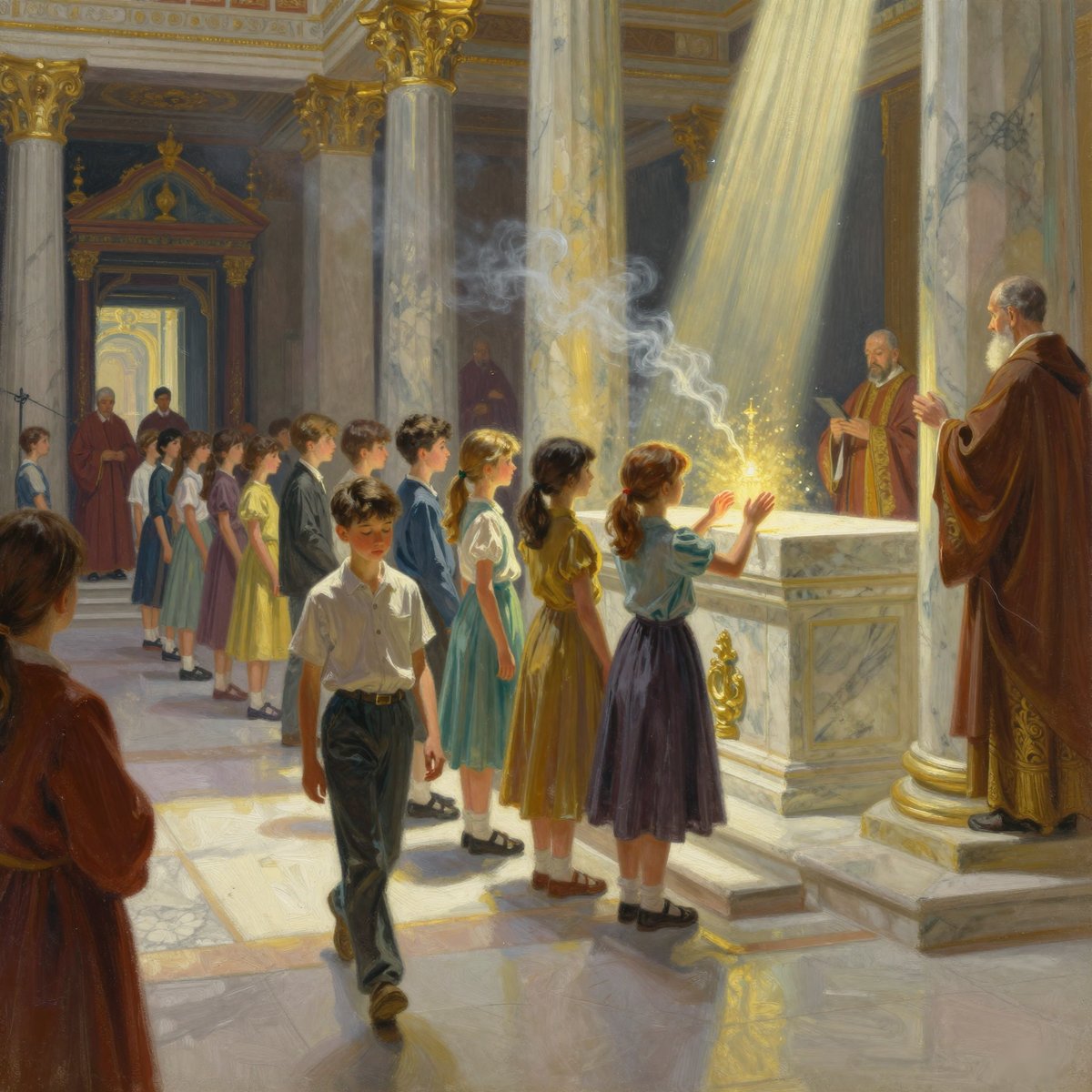
Selection Day. The light decides — or the men who own the altar do, which is not the same thing, and one boy walking away already knows the difference.
The map
On Aerthos - Thornstead and the Veridian frontier — a dead village rebuilt soul by soul, inside a palisade, against the forest. - The wilds and the delving sites — goblin camps, undead hollows, and the places people go down into on purpose. - Portus Magnus — the Roman-Renaissance port: marble, steam, presses, and a harbour that never sleeps. - The cairn — the altar the refused and the small gods share; the divine commons the temples pretend not to see. - Montum Sanctus — the priest-cartel's remote mountain seat, where access to the gods is decided. - The dead goddess's crater — a hearth goddess's grave with a hidden sanctuary growing in the bowl of it. - The Islands of Tangi and the open sea — a nation at peace so long it has forgotten what the peace was won from. - Kethara — the sealed desert continent: sands, oases, caravan roads, and the Builders' impossible aqueducts.
The other worlds - Thalassia — the drowning archipelago: stilt villages, sea-swallowed towns, a century left on the clock. - The far fragment — a vertical world where altitude is caste: airships and mountaintops above, the classless ground below.
Between the worlds - The Road and the gates — the ways between worlds, walked by gods, pilgrims, and the occasional unlucky cartographer. - The small corners where lost things hide — every world has them; one very quiet god keeps the casebook.
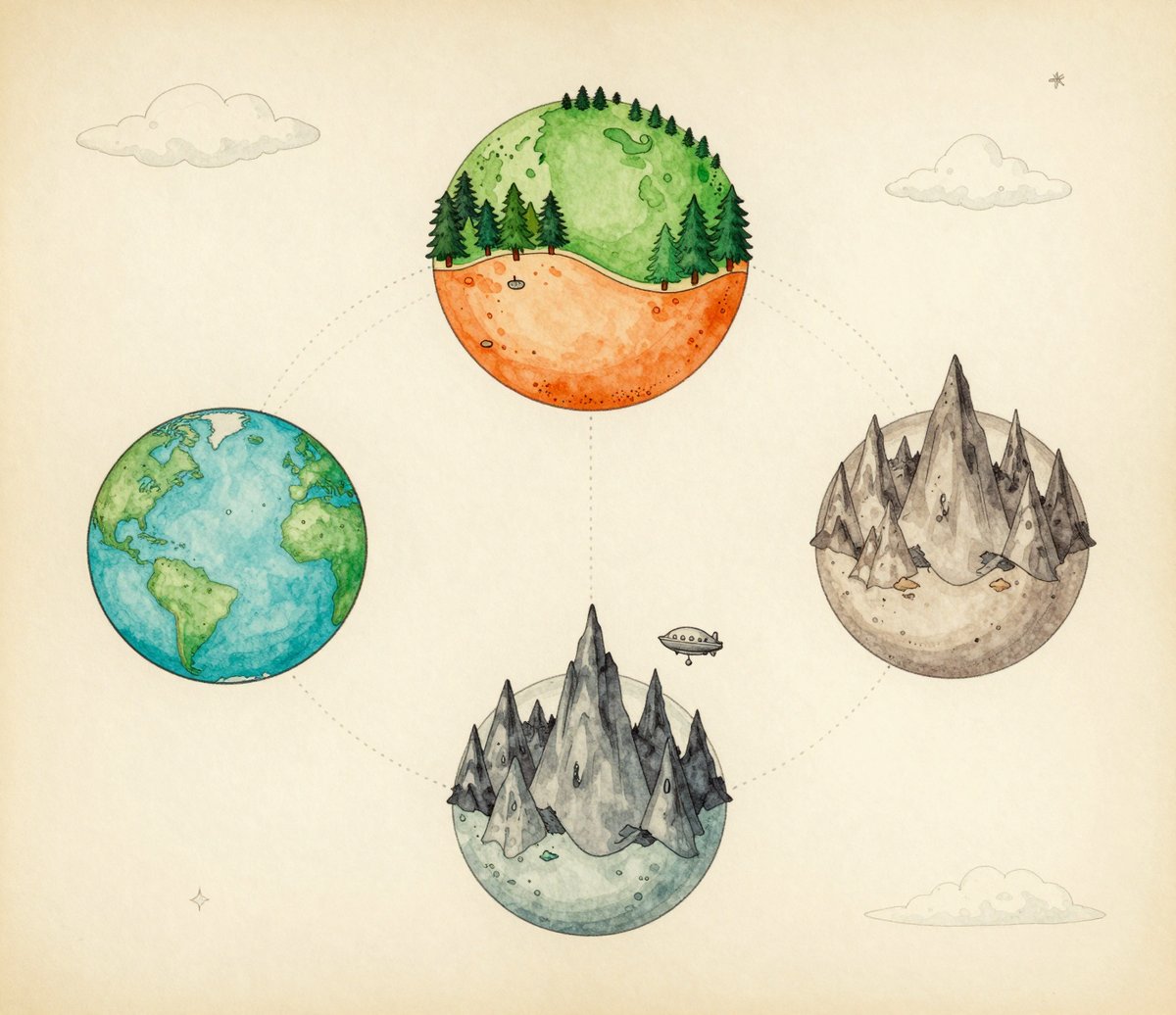
The cluster drawn as it is understood rather than as it is: separate worlds, a forested one and a drowned one and a vertical one, with the Road running between them. Gods walk those gaps. So do pilgrims, and the occasional unlucky cartographer.
Who you keep meeting
Ten series share the rulebook, not a cast — but a few figures thread through the cluster. (No cast-roster sheets exist yet for this universe; these names will get their own sheets in a later phase.)
- Ash — an amnesiac survival instructor summoned to save a dead village, who would not stay summoned. The cornerstone of the whole Forge.
- BOB — the voice at the back of Ash's skull: ancient, snarky, and more helpful than anything that old has a right to be.
- Sylvara — the goddess of the village, down to almost nothing when the story starts. What she and Ash rebuild is the Trinity the cluster keeps talking about.
- Wayne — a dead Australian truck driver, now the god of travellers, walking Kethara's roads toward godhood one caravan at a time.
- Verenthos — the god of lost souls. His book writes itself: a fresh page for every small frightened thing that does not yet know it can be found.
- Mara Holt — a war-averse medic building a secret sanctuary in a dead goddess's crater, on monster pacts instead of armies.
- Tane — an island boy whose Selection Day gave him a war-commander's mind and a warning nobody wants to hear.
- The Classless of Portus Magnus — the working majority the altar refused; the port runs on their hands, and their books are theirs.
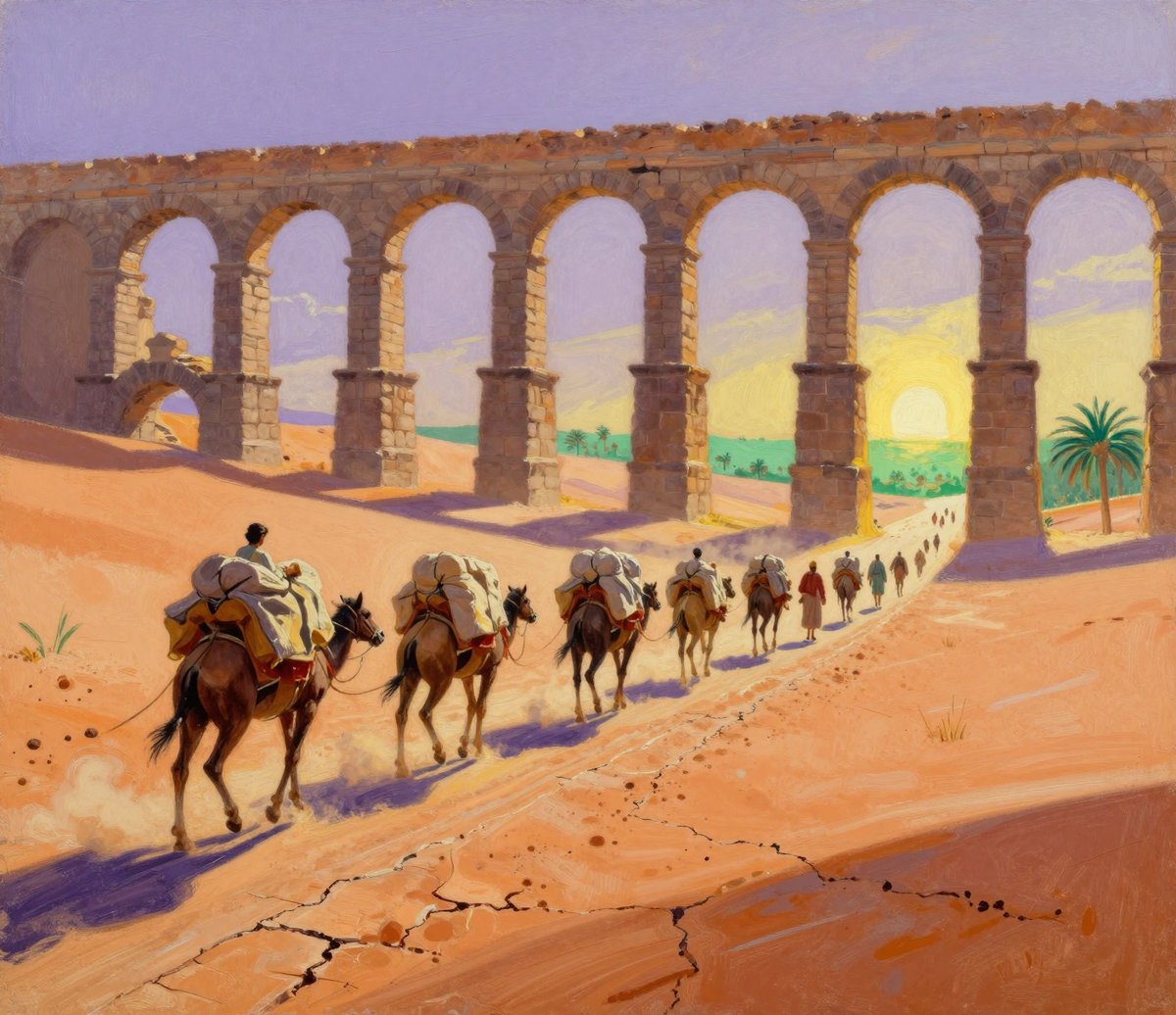
Kethara, sealed behind a wasteland nothing crosses. Somebody built those arches long before anyone now praying under them — and the god of travellers walks this road.
What this world promises
Progression fantasy with no stat screens and no chosen ones: climbs that are earned, powers that are bargains, and gods who stay dangerous even when they are on your side. Warm found communities defended against real costs; dry, understated telling; endings won rather than given — and someone always pays the price honestly.
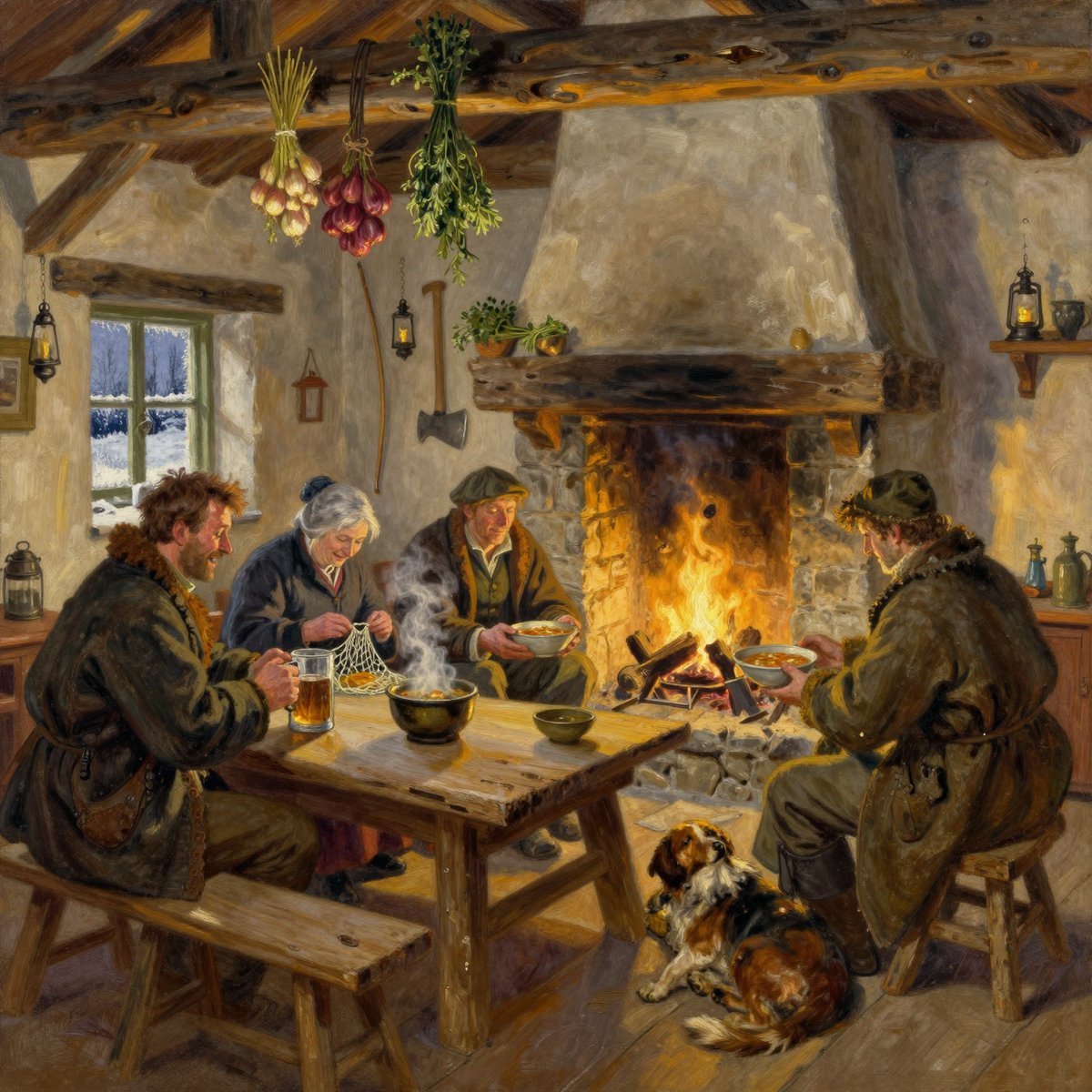
The room the Forge is actually defending. Not the wall: the fire, the stew, and everyone who made it home by dark.
Where to start
- The short way in — The Book of Found Souls: short tales from the casebook of the god of Lost Souls. The gentlest door in the cluster.
- The main door — Built Out of Nothing, book one of The Demon Yield: one dead village, one fading goddess, and the origin of the Trinity. The cornerstone of the whole Forge.
- The long way — follow the Trinity: The Village We Built, then The Tempering (the same frontier, twenty years on), then The Refugees (the three of them on another world entirely). Everything else — The Classless, The God They Built, The Drowning Years, The Travellers of the Dust, The Unfavoured, The Lost Priest — stands alone on its own corner of the map, in any order you like.