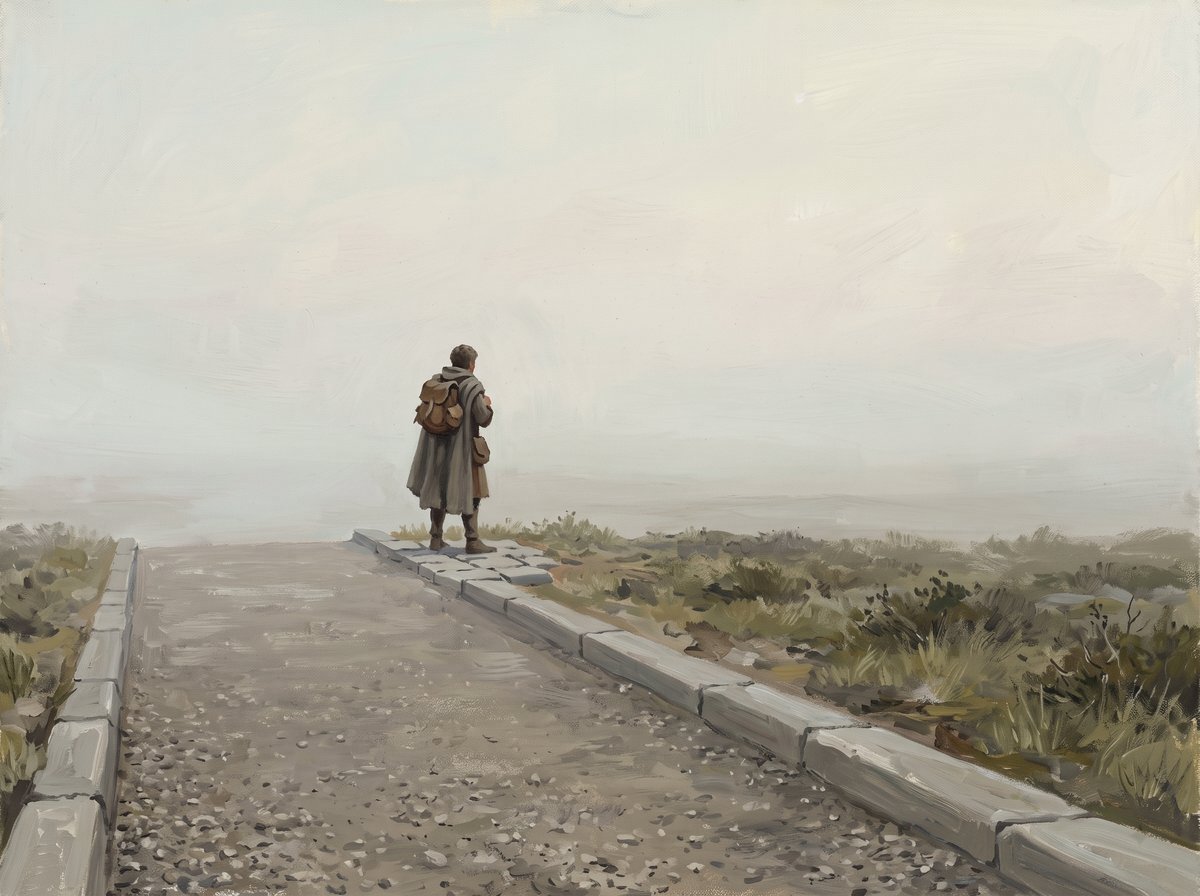
A made road, kerbed and metalled, running out into open ground with nothing on the other side of it. This is as near as most people ever come to learning there is another side.
In one line
The Forge is not one world but many, lying alongside each other, and the rules are not the same in all of them — which is a thing almost nobody living in one of them ever finds out.
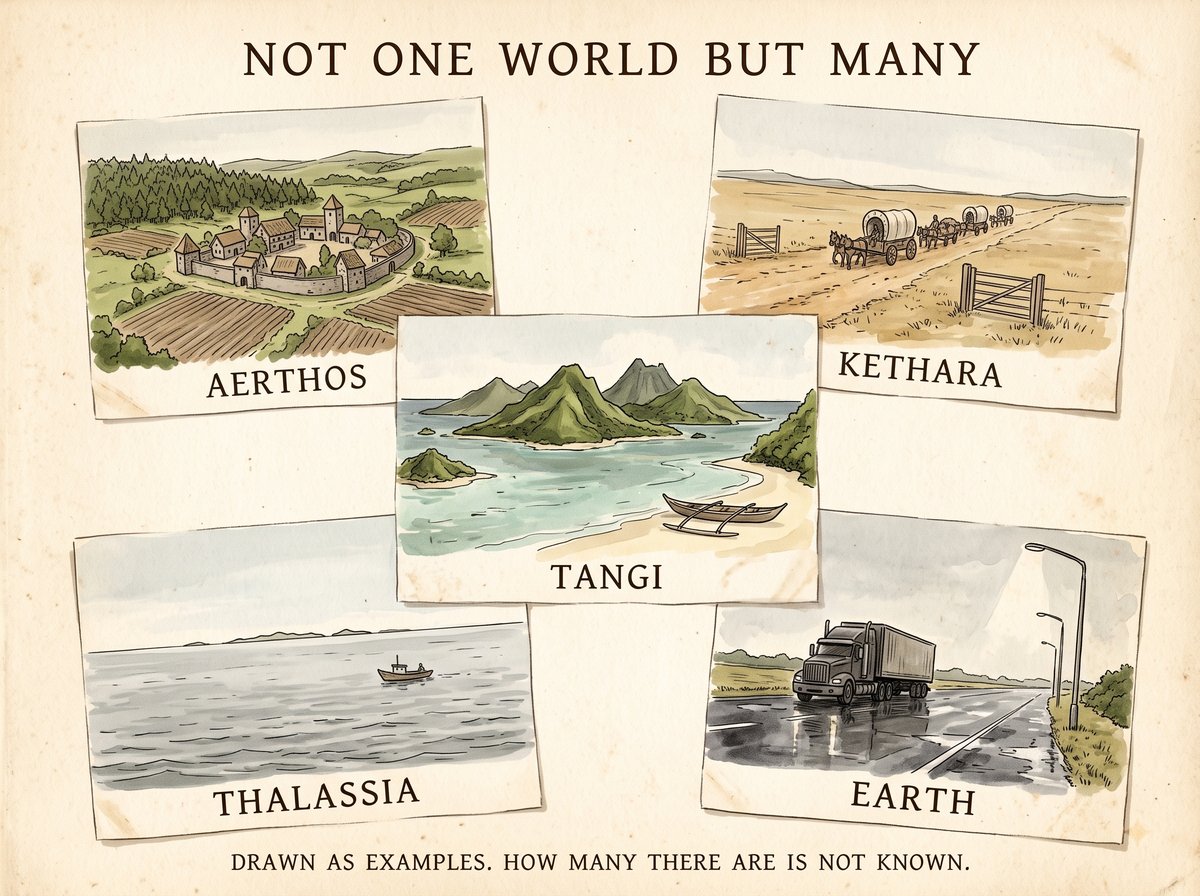
Drawn as examples. How many there are is not known.
How it works
Each world sits at its own pitch, and where two lie close together they rub, and the rubbing is what magic is made of. A world with near neighbours has power to spare. A world whose neighbour has emptied out is running down: spells cost more, gifts arrive unreliable, gods thin and die. A world with nothing close has almost none, and working there is ruinous rather than impossible. Nothing crosses easily. Ordinary travel simply fails at the boundary. What crosses is a gate built for it, or a god who can afford the passage, and neither is common.
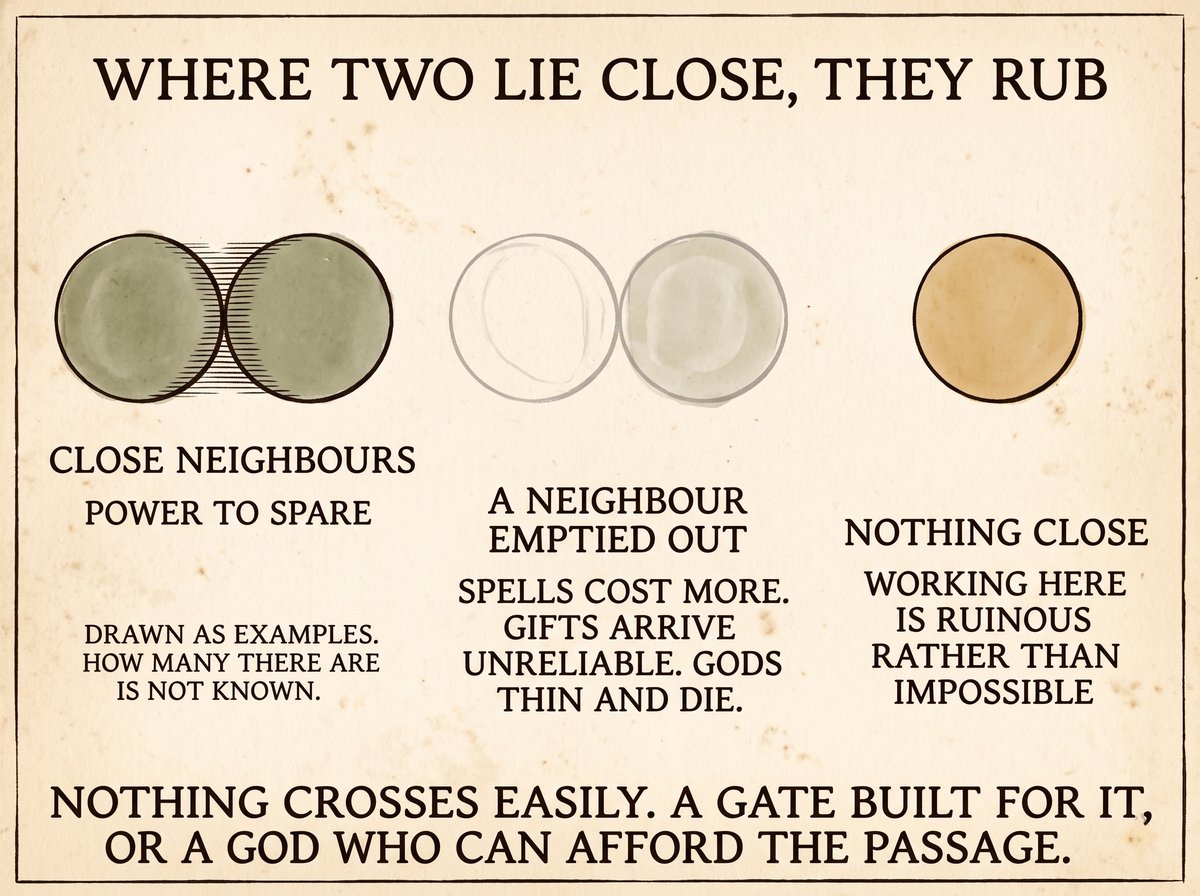
Three pairs of discs and one rule: where two worlds lie close together they rub, and the rubbing is what magic is made of. Let a neighbour empty out and everything costs more. The plate draws examples and says plainly that nobody knows how many there are.
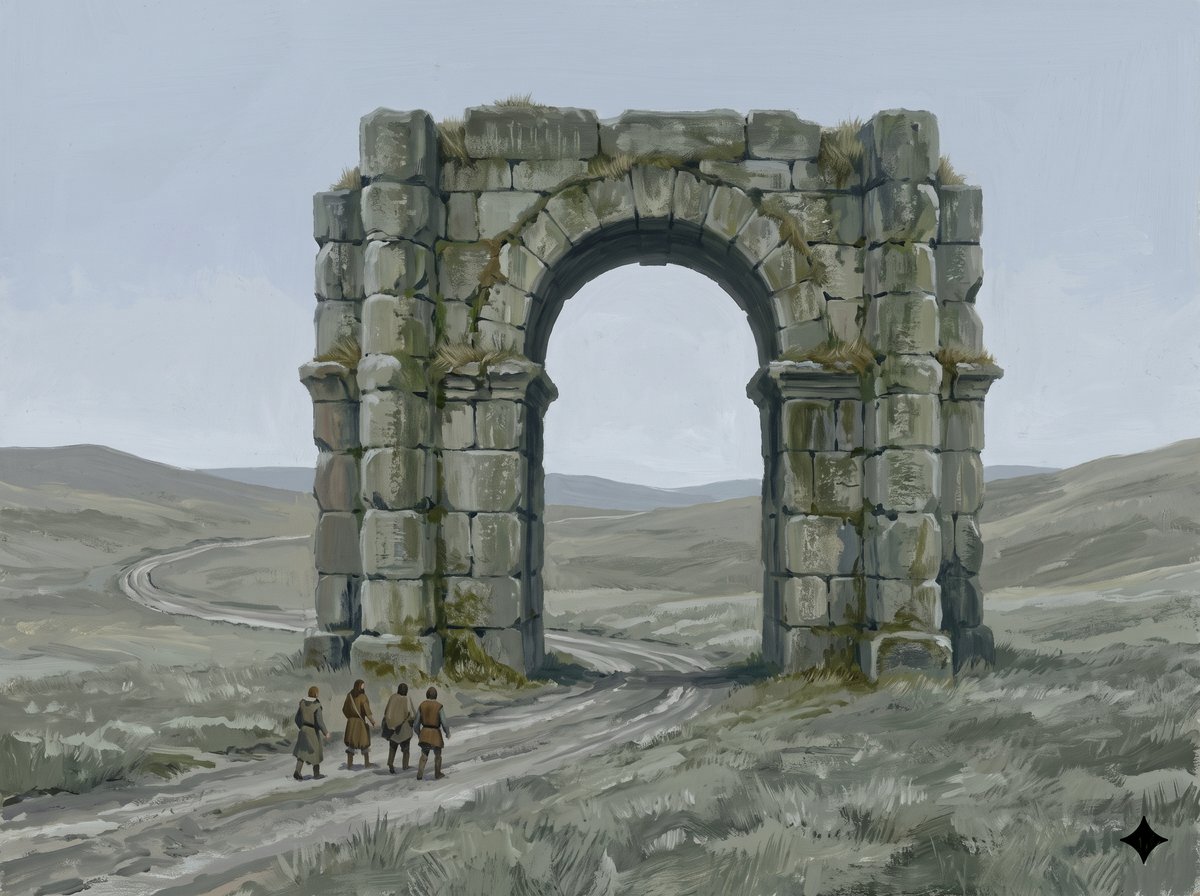
Nothing crosses easily. A gate built for it, or a god who can afford the passage.
Where it comes from
Nobody knows, and that includes the gods, who came after whatever began it and remember none of it. A world's eldest gods are its longest survivors, not its founders, and cannot tell you either. The arrangement is simply how things are, the way weather is, and it is old enough that nothing now alive holds an account of it.
Who knows it
Almost nobody. The gods know. A mortal who has been close enough to a god for long enough may be taught it. Someone who has actually crossed carries it for as long as the crossing lasts. Everyone else lives their whole life in one world and has no word for the arrangement at all — which is why you will read a great many of these books before anyone in one says it out loud.
Where you'll meet it
- The Lost Priest — a man who falls out of his own world into another and spends eight books using that world's word for the place. Start at The Map Is Not the Journey (book 1).
- The Demon Yield — a world with about a century left, and people who understand exactly why. Start at The Pearl of Driftwood (book 18 of 26).
Related entries
- A class — what a god's gift is, and why it behaves differently in a poorer world.
- BOB — the companion that comes with the gift.
- The World of the Forge — the universe brief.