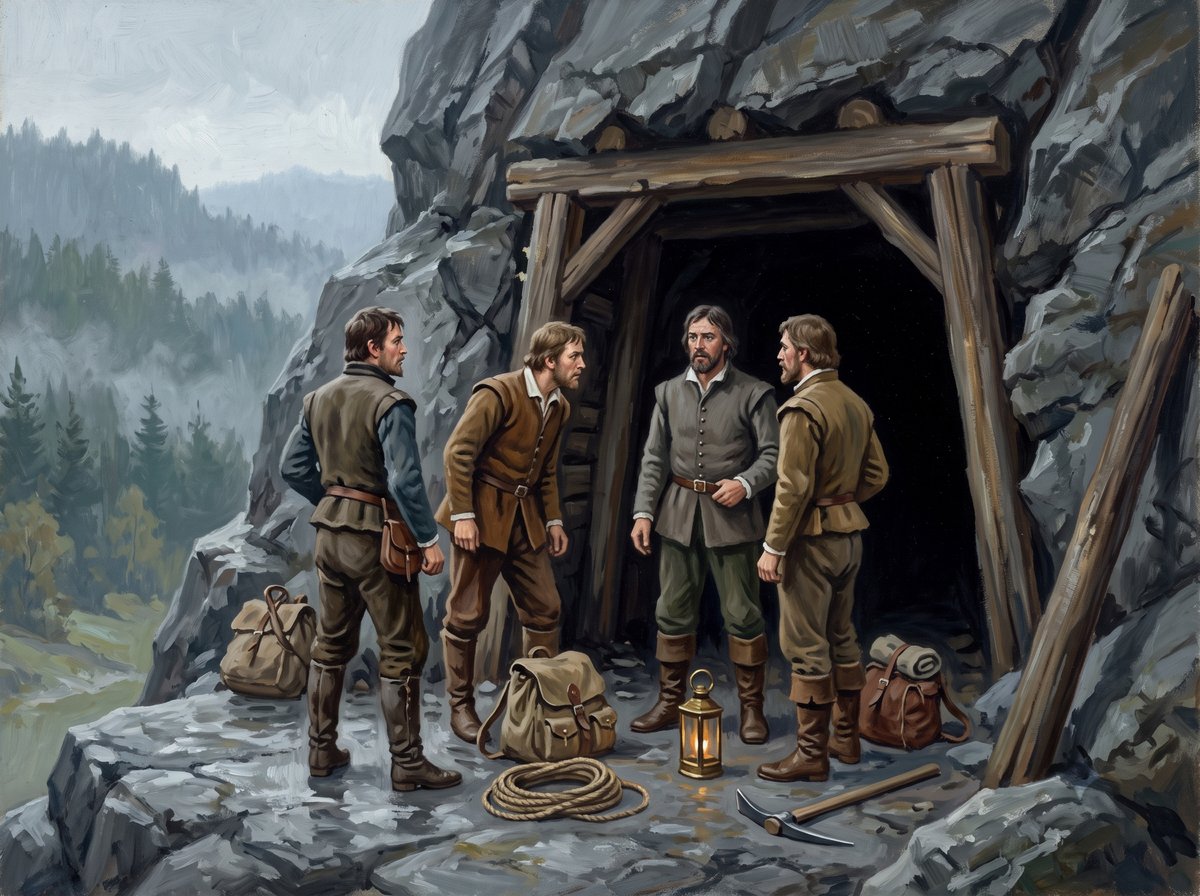
Kit down, lantern lit, and the argument happening outside the adit rather than inside it. Somebody has a number, and the number is why they are all still standing in the daylight.
In one line
In some of these worlds a reading arrives with a number on it — a creature's level, a class's, a party's — and the number is a rough warning rather than a rule anyone is shown the working for.
How it works
Where it appears, the Interface is a plain reading. It names a place, marks a creature, states that something has changed. Levels come with it: a class is spoken of as sitting at one, a creature is marked at one, and people who work together are spoken of as having a level between them. What a level means in practice is comparative — this is above you, that is not — and it gets used the way a soldier uses a threat estimate, to decide whether to go in. No scale is ever laid out and nothing is ever totalled.
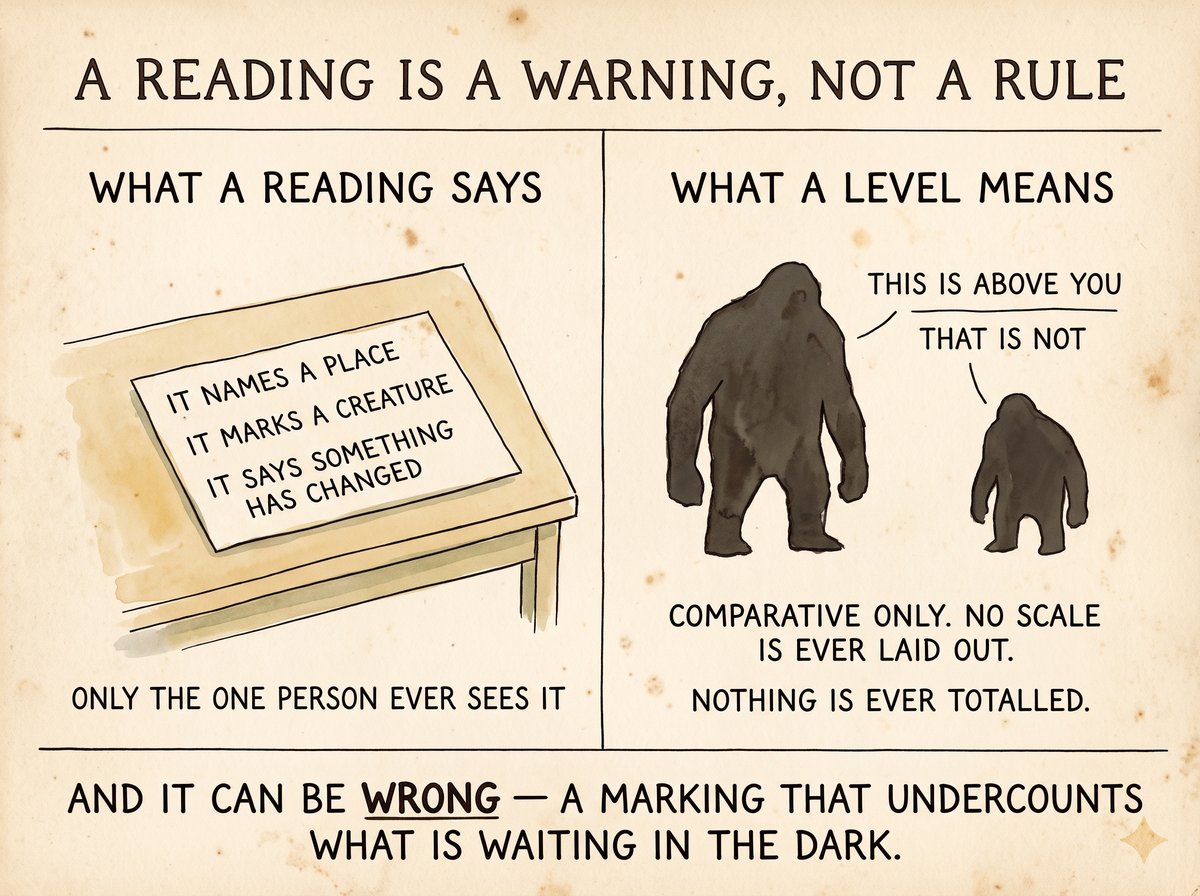
What a reading says, and what a level actually means. The two shapes on the right are the whole of the scale anyone is ever shown: this one is above you, that one is not. Nothing is totalled, and the marking can be wrong.
Where it comes from
The reading comes through a BOB, and it is a god's side of the arrangement made legible. It is not an authority. It is one voice's account of what is in front of you, and the books show it being wrong: a marking that undercounts what is actually waiting in the dark.
Who cares about it
- Anyone about to go down into somewhere — which is most of what a level is ever used for.
- Anyone deciding whether a fight is survivable — and getting it wrong.
Where you'll meet it
- The Drowning Years — where the readings do the most work and are least reliable. Start at A Ship Full of Misfits (book 1).
- The Demon Yield — a world where the readings are failing along with everything else. Start at The Pearl of Driftwood (book 18 of 26).
Related entries
- BOB — whose readout this is.
- A class — what is being levelled.
- The World of the Forge — the universe brief.